
Graduate Visa Changes: What Has Changed and What It Means for You
Graduate visa changes explained: the move to 18 months from January 2027, dependant limits, Skilled Worker changes and what they mean for graduates.


In this article
- Timeline of Key Changes
- The 18-Month Change
- Dependants
- What Comes Next After the Graduate Visa
- Why the Graduate Route Was Created
- The Dependants Change in January 2024
- The Migration Advisory Committee Review in 2024
- The White Paper in May 2025
- How the Eighteen-Month Rule Works
- Why Doctoral Graduates Keep Three Years
- Changes to Skilled Worker That Affect Graduates
- New Entrant Rates
- Changes to Settlement
- Changes to University Compliance
- Fee Increases
- What Has Not Changed
- What the Changes Mean for Current Students
- What the Changes Mean for Future Students
- What the Changes Mean for Employers
- How to Stay Up to Date
- Our Summary
- Common Misconceptions About the Changes
- A Fictional Example: Two Graduates, Two Dates
- How the Changes Affect Tech Graduates in Particular
- How the Changes Affect Founders
- How the Changes Affect Researchers
- How the Changes Interact With Other Countries' Policies
- Whether More Changes Are Likely
- How Universities Are Responding
- What You Can Do Now
- A Note on Reliable Sources
- What the Changes Mean for Dependants Already in the UK
- Planning a Switch Under the New Rules
- How We Will Keep This Article Updated
- Key Dates to Remember
- Weighing the Graduate Visa Against Alternatives
- Your Next Step
- How We Checked This Article
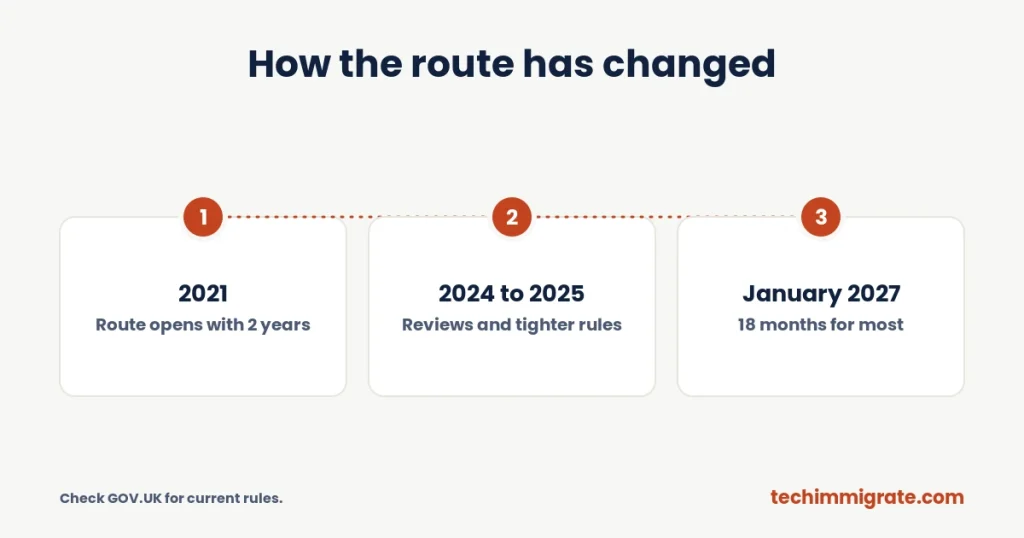
The Graduate visa has changed more than most routes since it opened. It began in July 2021 as a two-year post-study work period for bachelor's and master's graduates and three years for doctoral graduates. Since then, rules on student dependants have tightened, the route has been reviewed by the Migration Advisory Committee, and the government has confirmed that most new Graduate visas will be cut to 18 months from 1 January 2027. Related changes to Skilled Worker and settlement also affect what graduates can do next.
This guide explains the main Graduate visa changes, what they mean for current and future students, and how to plan around them. For the current length, see our guide to how long the Graduate visa is.
Key takeaways
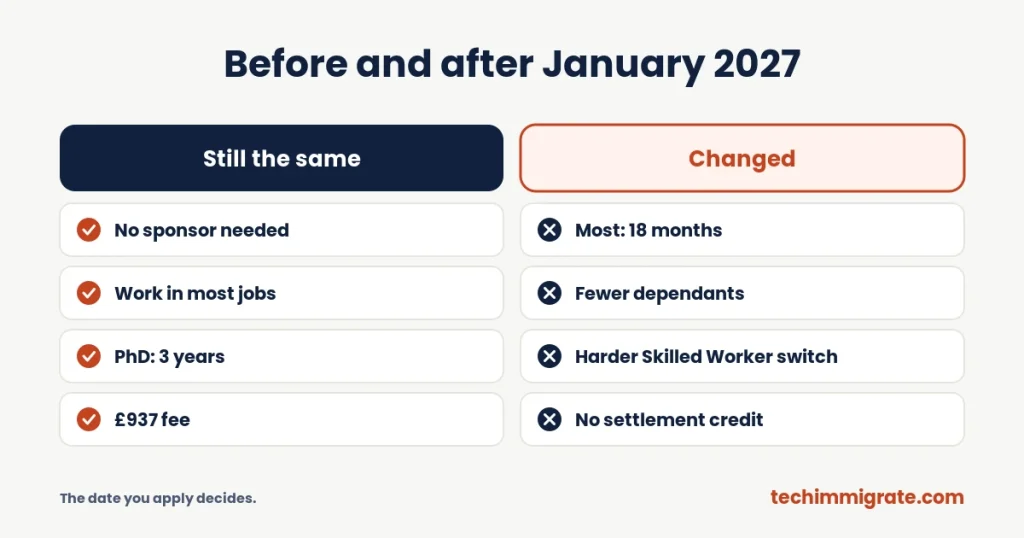
- From 1 January 2027, most new Graduate visas last 18 months instead of 2 years. Doctoral graduates keep 3 years.
- What matters is the date you apply. Apply on or before 31 December 2026 to get 2 years.
- Since January 2024, most taught postgraduate students cannot bring dependants on a Student visa, which affects who can later be a Graduate visa dependant.
- Skilled Worker changes since 2025, including degree-level jobs and B2 English, affect graduates planning to switch.
- Time on the Graduate visa does not count towards settlement under the earned settlement plans.
- The fee and health surcharge have risen over time. The visa fee is now £937.
Timeline of Key Changes
| When | Change |
|---|---|
| July 2021 | Graduate route opens: 2 years, or 3 for doctoral graduates |
| January 2024 | Most taught postgraduate students can no longer bring dependants |
| May 2024 | Migration Advisory Committee review recommends keeping the route |
| May 2025 | Government proposes cutting the visa to 18 months |
| July 2025 | Skilled Worker limited mainly to degree-level jobs |
| January 2026 | B2 English for new Skilled Worker applicants |
| 1 January 2027 | Most new Graduate visas last 18 months |
The 18-Month Change
Bachelor's and master's graduates applying from 1 January 2027 usually get 18 months. Doctoral graduates still get 3 years. The visa still cannot be extended.
Dependants
Because most taught postgraduate students can no longer bring dependants on a Student visa, fewer graduates have family members who can join them on the Graduate visa.
What Comes Next After the Graduate Visa
Skilled Worker now needs degree-level jobs and B2 English for new applicants. New entrant salary rates still help graduates.
Most new Graduate visas will last 18 months from 1 January 2027, down from 2 years.
No. Doctoral graduates still get 3 years.
Yes, if you apply on or before 31 December 2026 and meet the requirements.
No. It continues, but with a shorter length for most graduates.
No. It does not count towards settlement.
Why the Graduate Route Was Created
The Graduate route opened in July 2021, reviving the idea of a post-study work period that had existed in different forms before 2012. Its aim was to make the UK more attractive to international students by giving them time to work after graduating without needing a sponsor. For many tech graduates, it became the bridge between university and a first professional role. Understanding that purpose helps explain later debates. Supporters argued the route attracted talented students and supported universities. Critics argued that many graduates ended up in lower-paid roles and that the route added to overall migration numbers. Those competing views shaped the changes that followed.
The Dependants Change in January 2024
From January 2024, most international students on taught postgraduate courses lost the ability to bring family members as dependants on their Student visa. Students on postgraduate research courses, such as PhDs, kept that ability. Because Graduate visa dependants must usually have been dependants on the Student visa, this change flows through to the Graduate route. Fewer graduates now have partners or children who can stay with them on the Graduate visa. Children born in the UK during the parent's stay remain an exception.
The Migration Advisory Committee Review in 2024
In 2024, the government asked the Migration Advisory Committee to carry out a rapid review of the Graduate route. The committee looked at who used the route, what jobs graduates did and whether there was evidence of abuse. It recommended that the route be retained, while noting concerns about some recruitment practices and the quality of outcomes for some graduates. Its findings are public and are worth reading if you want to understand the evidence behind later decisions.
The White Paper in May 2025
In May 2025, the government published an Immigration White Paper setting out plans to reduce net migration. Among many proposals, it said the Graduate route would be shortened to eighteen months. It also proposed changes to Skilled Worker, settlement and university compliance. Not every proposal was implemented in the form first described, but the shorter Graduate visa was confirmed and is due to apply to applications from 1 January 2027.
How the Eighteen-Month Rule Works
The rule is based on the date you apply. If you apply on or before 31 December 2026, you usually receive the previous length of two years. If you apply on or after 1 January 2027, you usually receive eighteen months, unless you are a doctoral graduate. The start date is still the date of approval, and the visa still cannot be extended. The fee and the requirements are otherwise unchanged by this rule.
Why Doctoral Graduates Keep Three Years
Doctoral graduates continue to receive three years. The government has generally treated researchers as a priority group, and a longer period reflects the time researchers often need to secure academic posts or research roles in industry. If you are close to finishing a PhD, the January 2027 change does not reduce your visa length, but other changes, such as those to Skilled Worker and settlement, may still affect your plans.
Changes to Skilled Worker That Affect Graduates
From 22 July 2025, new Skilled Worker applicants generally need a job at degree level, unless the role is on a shortage list. Salary thresholds also rose. From 8 January 2026, new main applicants need English at B2 level. These changes affect graduates who plan to switch from the Graduate visa to Skilled Worker. Most professional tech roles still qualify, and new entrant salary rates still help, but some junior or support roles no longer qualify.
New Entrant Rates
Graduates switching to Skilled Worker can often qualify as new entrants, allowing sponsors to pay a lower salary for a limited period. The new entrant period lasts up to four years in total, including time on the Graduate visa. With a shorter Graduate visa, graduates have more new entrant time left when they switch, which can be a small advantage.
Changes to Settlement
The government's earned settlement reforms will change how long people wait before they can settle and what they must show. Under the published plans, time on the Graduate visa does not count towards settlement. That was also true under the previous rules for most routes, but the reforms make the position clearer and introduce new requirements, such as B2 English and income thresholds for faster settlement. Graduates who want to settle should move onto a qualifying route as soon as practical.
Changes to University Compliance
Universities that sponsor international students must meet compliance standards, such as limits on visa refusal rates, enrolment rates and course completion rates. The government has tightened these standards. While these changes mainly affect universities, they can influence how carefully universities monitor attendance and report completion, which in turn affects Graduate visa timing.
Fee Increases
The Graduate visa fee and the Immigration Health Surcharge have both increased since the route opened. The fee is now £937 and the surcharge is usually £1,035 a year. With a shorter visa from 2027, the total surcharge will be lower, but the cost per month of permission is effectively higher. Check GOV.UK for the latest figures before applying.
What Has Not Changed
Despite the changes, the core of the Graduate visa remains the same. You still do not need a sponsor, a job offer, a minimum salary, an English test or maintenance funds. You can still work in most jobs, be self-employed and look for work. You still apply from inside the UK after completing an eligible course. For many graduates, it remains the most flexible way to start a career in the UK.
What the Changes Mean for Current Students
If you are studying now, the most important question is when you will be able to apply. If your completion will be reported in 2026, you may still get two years by applying before the end of December. If it will be reported in 2027, you will usually get eighteen months unless you are a doctoral graduate. Plan your job search and next visa with that in mind.
What the Changes Mean for Future Students
If you are considering studying in the UK, the shorter Graduate visa is one factor to weigh against others, such as course quality, cost and career opportunities. Eighteen months is still a meaningful period to gain experience. Some prospective students compare it with post-study options in other countries. Think about your long-term goals and how the Graduate visa fits into them.
What the Changes Mean for Employers
Employers hiring graduates should note that Graduate visa holders will have less time before they need sponsorship or another route. Employers who want to keep graduate hires may need to plan sponsorship earlier. Those who already hold licences may find graduates more interested in roles that offer a clear path to sponsorship.
How to Stay Up to Date
Immigration rules change through statements of changes laid before Parliament, often several times a year. The Home Office announces major changes in advance. To stay up to date, check GOV.UK regularly, follow official announcements and read reliable summaries. Be cautious of social media posts that exaggerate or misreport changes.
Our Summary
The Graduate visa remains a valuable route, but it is shorter and sits within a tighter system than when it opened. Apply as early as you can, plan your next route from the start and keep checking for changes.
Common Misconceptions About the Changes
Some graduates believe the Graduate visa has been abolished. It has not. Others think the eighteen-month rule applies to people who already hold a two-year visa. It does not; existing visas keep their original length. Some assume doctoral graduates are affected. They are not. Another misconception is that the change applies from the date your course ends. In fact, it depends on the date you apply. Clearing up these misunderstandings can help you plan with confidence.
A Fictional Example: Two Graduates, Two Dates
Consider two fictional classmates on the same one-year master's course in computer science. Both finish in September 2026. The first receives confirmation that completion was reported in mid-December and applies the next day. Because the application is made before 31 December 2026, they receive a two-year Graduate visa. The second is waiting on a resit, and completion is not reported until late January 2027. They apply immediately, but because the application date falls after 1 January 2027, they receive eighteen months. Both are eligible, both pay the same fee, and both can work freely. The only difference is six months of time, driven entirely by the date of application. The example is fictional, but it shows why the reporting date matters so much for anyone finishing near the cut-off.
How the Changes Affect Tech Graduates in Particular
Tech graduates often move quickly into skilled, well-paid roles, so many of them were already likely to switch to Skilled Worker within two years. For those graduates, the shorter visa may make little practical difference, provided they find a sponsoring employer within eighteen months. The change matters more for graduates who take longer to find their first role, those who start in non-sponsoring startups, and those who want to build towards Global Talent. These graduates have less time to build experience, gather evidence and plan their next step. Starting the job search during the final term, targeting employers that sponsor and documenting achievements from day one all become more important.
How the Changes Affect Founders
Some graduates use the Graduate visa to start a business. With eighteen months, there is less time to test an idea, build a product and attract customers or investors before needing another visa. Founders who hope to move onto Innovator Founder or Global Talent should start preparing early, including understanding what endorsing bodies look for. A shorter runway does not make founding impossible, but it rewards clear planning and quick validation of the business idea.
How the Changes Affect Researchers
Doctoral graduates keep three years, so the headline change does not reduce their time. However, researchers are affected by the wider changes, especially those to Skilled Worker and settlement. Many researchers move into university or industry roles that can be sponsored, while others may qualify for Global Talent through a research endorsing body. Global Talent can offer a faster path to settlement for some research-endorsed routes, so it is worth exploring early.
How the Changes Interact With Other Countries' Policies
International students often compare post-study work options across countries. Other popular study destinations also adjust their policies from time to time, sometimes tightening and sometimes loosening. The UK's shorter Graduate visa is one part of that wider picture. For prospective students, it is worth looking at the full package in each country, including course quality, costs, employment outcomes and long-term settlement options, rather than focusing on a single figure.
Whether More Changes Are Likely
Immigration policy in the UK continues to evolve, and further changes to the Graduate route or related routes are possible. Policy reviews, new statements of changes and political priorities can all lead to adjustments. That does not mean the route will disappear, but it does mean you should check the rules close to the time you apply and avoid relying on information that is more than a few months old. Official announcements usually give some notice before major changes take effect.
How Universities Are Responding
Universities have responded to the changes in different ways. Some have strengthened careers support for international students, including earlier job search programmes and links with employers that sponsor. Others have adjusted course start dates or reporting processes. If you are a current or prospective student, ask your university what support it offers for graduate employment and how it handles completion reporting around the end of the year.
What You Can Do Now
If you are affected by the changes, focus on what you can control. Know your Student visa expiry date and your expected completion reporting date. If you can apply before 31 December 2026, prepare to do so. Start your job search early, target sponsoring employers and build a record of achievements. If you are interested in Global Talent, start gathering evidence now. These steps make the most of whatever length of visa you receive.
A Note on Reliable Sources
Changes to immigration rules generate a lot of commentary, some of it inaccurate. Rely on GOV.UK, the Immigration Rules and official statements of changes for the facts. Commentary from universities, regulated advisers and reputable organisations can help explain what the changes mean. Treat forum posts and social media as applicant-reported experiences rather than authoritative guidance, and check anything important against official sources.
What the Changes Mean for Dependants Already in the UK
If your partner or children are already in the UK as your dependants on a Student visa, they can usually still apply to stay with you on the Graduate visa, provided they meet the requirements. The January 2024 dependants change affects new students on taught postgraduate courses who wanted to bring family. It does not usually remove family members who were already here lawfully as dependants. If your family is in this position, check that each person applies before their current permission expires, and that their applications are linked to yours. Their visas will end on the same date as yours, whether that is two years, eighteen months or three years from approval.
Planning a Switch Under the New Rules
With a shorter visa and tighter Skilled Worker rules, planning a switch matters more than ever. Check early whether your target roles are at degree level and meet the salary rules, including new entrant rates. Make sure you can meet the B2 English requirement, which many graduates can do through their UK degree, although confirmation from Ecctis may be needed. Talk to employers about sponsorship in your first year rather than your last months. If sponsorship looks uncertain, explore Global Talent or other routes as a backup.
How We Will Keep This Article Updated
We review our Graduate visa articles when the rules change. If you notice something that looks out of date, check GOV.UK first, because the official guidance always takes priority over any summary, including ours. We focus on what has been confirmed rather than what has been proposed, and we note the date we last checked the rules at the end of each article.
Key Dates to Remember
The key dates are simple. Applications on or before 31 December 2026 usually lead to two years for non-doctoral graduates. Applications from 1 January 2027 usually lead to eighteen months. Doctoral graduates receive three years either way. Your own Student visa expiry date and completion reporting date decide when, within those rules, you can actually apply.
Weighing the Graduate Visa Against Alternatives
The changes make it worth comparing the Graduate visa with other options more carefully than before. If you already have a sponsored job offer when your course ends, switching straight to Skilled Worker may save money and start your settlement clock sooner. If you graduated from a university on the eligible list, the High Potential Individual visa may be an option, although it also cannot be extended and does not count towards settlement. If you have an exceptional record, Global Talent may be possible, though few graduates qualify immediately. For most new graduates, the Graduate visa is still the simplest and most flexible first step, even at eighteen months. The right choice depends on your job prospects, your finances, your family and your long-term goals, so take time to compare before you apply.
Your Next Step
With less time on the Graduate visa, planning your next route matters more. Our role-specific Global Talent guides explain how tech professionals qualify without a sponsor.
How We Checked This Article
We checked the changes against GOV.UK's Graduate visa pages, the Immigration White Paper and statements of changes to the Immigration Rules in November 2026.
Tech Immigrate is independent of the Home Office. This article is general information, not legal advice. Check GOV.UK before you apply.
We write practical guides for tech professionals applying for the UK Global Talent visa. Tech Immigrate is independent of Tech Nation and the Home Office, and our articles are general information, not legal advice. Rules and fees change, so always check gov.uk before you apply.


